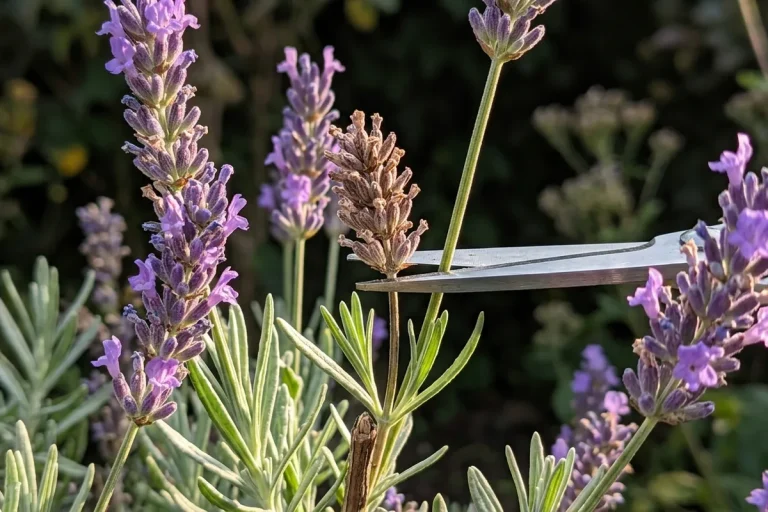

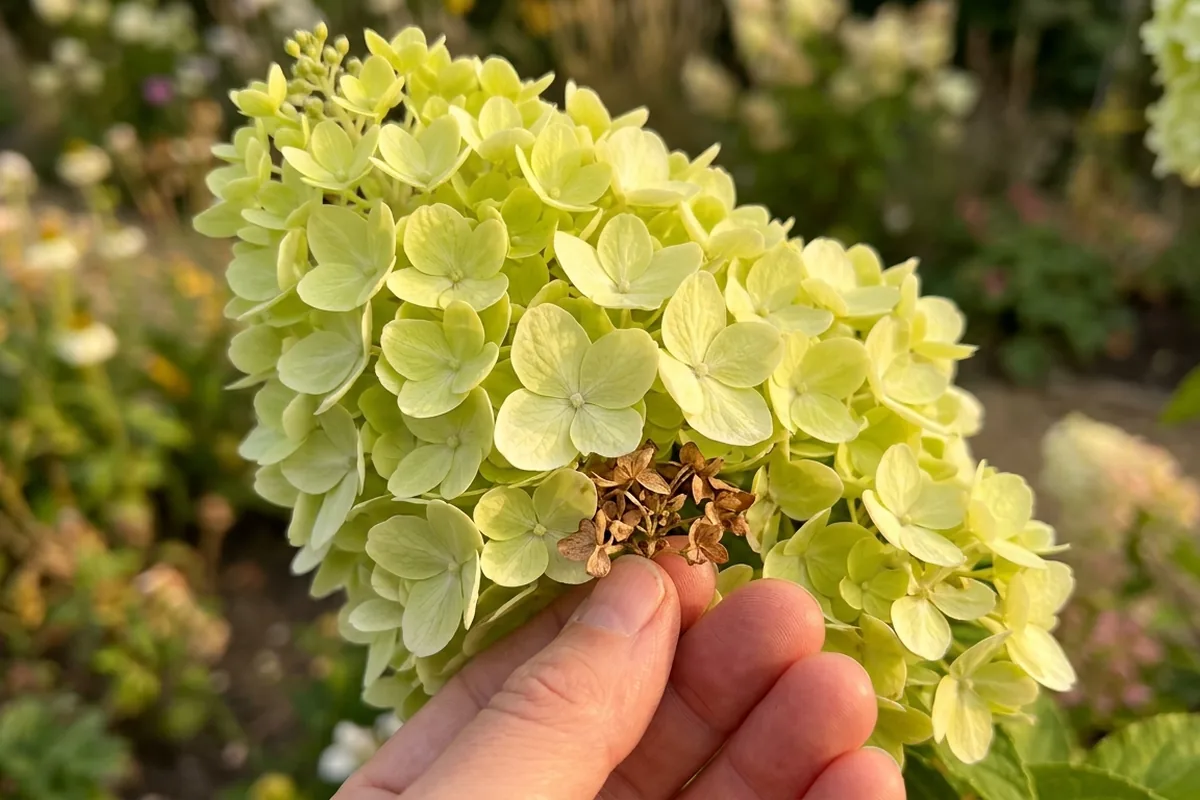
Hydrangea ‘Limelight’ earns its place with those big lime-to-cream panicles that slowly blush pink towards autumn. If yours is sitting in a border or pot with floppy stems, flowers that brown too fast or leaves that scorch at the edges, a few simple tweaks usually bring it back to full show-off mode.
The basics Hydrangea Limelight needs to thrive
‘Limelight’ is a paniculata hydrangea, so it is tougher and more sun-tolerant than the traditional mophead types, but it still dislikes extremes.
- Light: Best in full sun to light shade, especially in the North and Scotland. In hotter southern gardens, give it afternoon shade to avoid scorched leaves and crisped flower edges.
- Soil: Any reasonable garden soil, ideally moist but well-drained. Heavy clay is fine once improved with compost; very thin, dry soil will need regular watering and mulch.
- Watering: In the ground, water well for the first growing season, especially in dry spells. In containers, water when the top few centimetres of compost are dry. If you lift the pot and it still feels heavy, wait.
- Feeding: A light sprinkle of balanced, slow‑release fertiliser in spring usually suffices. Do not overfeed with high‑nitrogen lawn or general feeds, or you’ll get lush leaves and fewer flowers.
- Mulch: In late spring, add a 5–7 cm layer of composted bark or garden compost around (not against) the stems to hold moisture and steady soil temperature.
If leaves droop on a hot afternoon but perk up again by evening, that is usually heat, not a watering crisis. This is the point where many people water again too soon and end up with soggy roots.
Pruning Hydrangea Limelight without losing flowers
Unlike mophead hydrangeas, ‘Limelight’ flowers on new wood, so pruning in late winter or very early spring is both safe and helpful.
- Timing: Late February to March, once the worst frosts have passed but before new growth really starts.
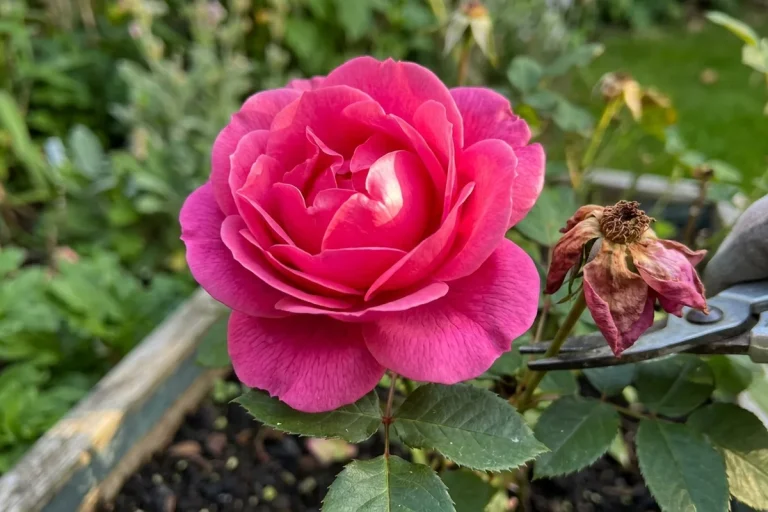
- What to remove: Cut out any dead, crossing or very weak stems right at the base.
- How hard to prune: For a medium shrub, reduce last year’s flowering stems to two or three strong buds from the base (often 30–60 cm from ground level). This keeps the plant tidy and encourages sturdy new shoots with large flower heads.
- Older, overgrown plants: Over 2–3 years, remove a third of the oldest, thickest stems at ground level each spring to rejuvenate without shocking the plant.
If your shrub is leaning or opening up after winter wind, you can shorten a few stems a little more to balance the shape.
Pots, borders and coping with British weather
In borders, ‘Limelight’ is fairly forgiving once established. The main issues come from containers and changeable weather.
For pots:
- Choose a large container with drainage holes; this is not a plant for tiny patio pots.
- Use a peat‑free loam‑based compost mixed with some garden compost for weight.
- In a dry summer spell, you may be watering every day in hot, windy weather. Always check the compost below the surface first; a quick finger check tells you more than a dry-looking top.
- Empty any saucer holding water the next morning so roots are damp, not submerged.
With weather:
- Damp springs can leave compost wet for days; if new leaves are yellowing and compost is still cold and soggy 3–4 cm down, ease off watering and lightly fork the surface to let air in.
- First frost may catch late flowers; you can cut some stems for the house just before a cold snap and dry them indoors.
If the leaves look worse after every “fix”, stop changing several things at once. Check light, compost moisture and pruning first; these three usually explain most problems with ‘Limelight’.
A well-sited, sensibly pruned ‘Limelight’ will reward you with months of changing flower colour and strong, upright stems. Look at where it’s planted, how wet the compost really is, and when you last pruned; one careful adjustment there is often all it needs.
Reader note
The Flower Expert is an independent gardening publication. Your support helps us keep creating practical plant care guides for everyday UK readers.
This article was created with the assistance of AI and reviewed by an editor. It is intended as general gardening information, not personalised professional advice.
If you still have a question, or if something looks unclear or inaccurate, you can contact us through our contact form.
If you found this article helpful, please consider sharing it on social media or leaving a comment below with your own experience. It helps other readers too.