
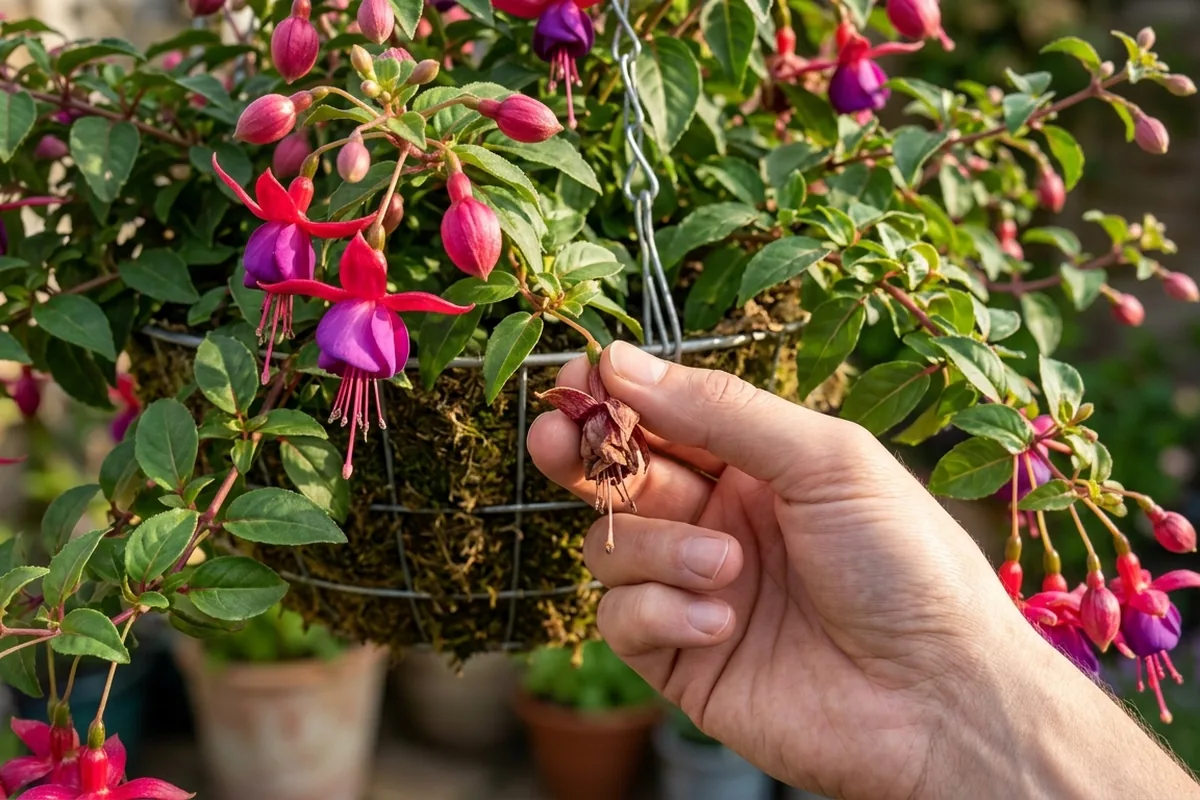
To keep container fuchsias blooming, you need three things in balance: steady moisture, regular feeding and constant deadheading. If your plant gave you a flush of flowers in June and now looks leafy with just a few buds, it’s asking for a bit of help rather than giving up on summer.
The simple routine that keeps flowers coming
Fuchsias in pots work hard. They’re often on a sunny patio, in wind, with roots confined to a small volume of compost. That means they dry out and run out of feed more quickly than plants in the ground.
Aim for this basic rhythm:
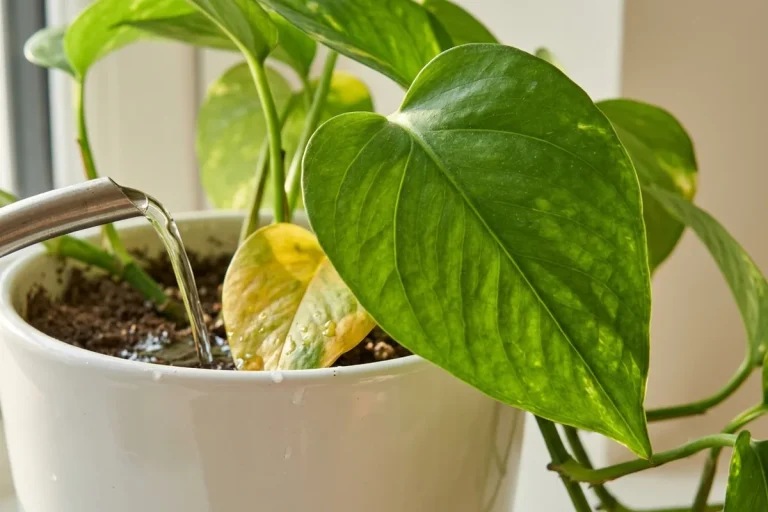
- Water deeply when needed. Check the compost with a finger 3–4 cm down. If it feels dry at that depth, water until it runs from the drainage holes, then empty any saucer. If you lift the pot and it still feels heavy, wait.
- Feed little and often. Use a high-potash liquid feed (tomato feed works well) every 7–10 days from late spring to late August. Always follow the label.
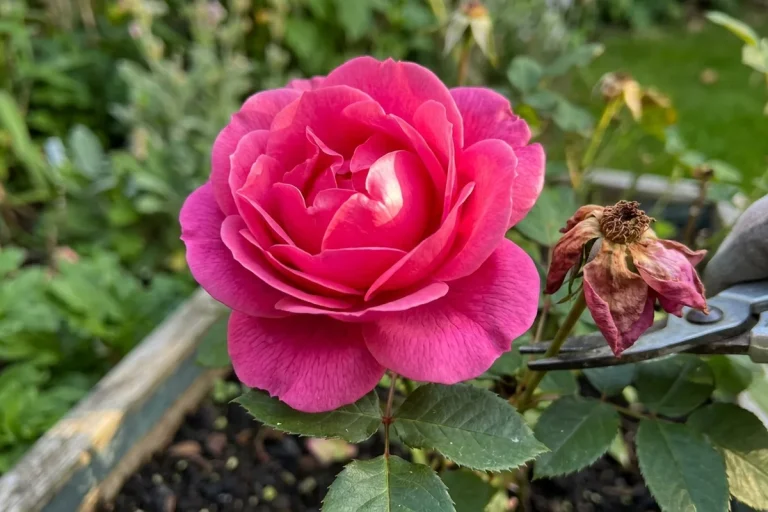
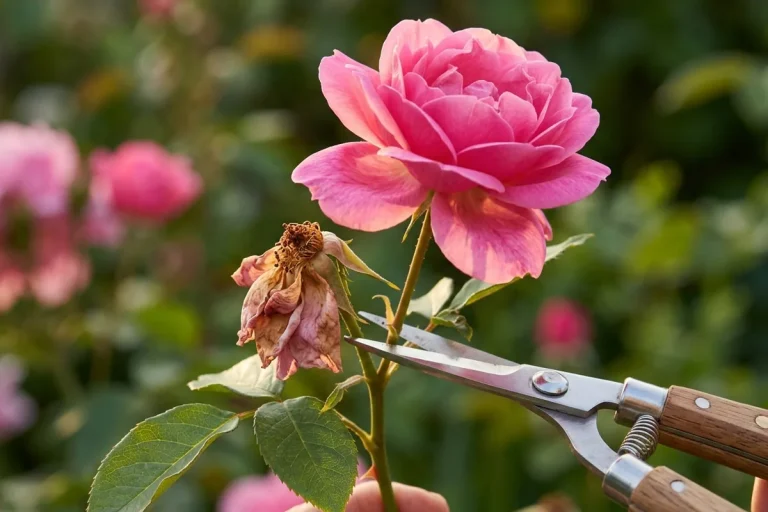
- Deadhead properly. This is the step many people rush. Pinch or snip off not just the faded flower, but the swelling seed pod just behind it. If you leave the pod, the plant thinks it has finished its job and slows new buds.
Check for flowers at different stages along each stem. The useful clue is not one bloom, but the pattern: if you only see old seed pods and leaves, it’s time for a tidy and a feed.
Light, temperature and the right position
Fuchsias do best in bright but not scorching conditions. In the UK, most will flower well in:
- morning sun and afternoon shade, or
- dappled shade all day.
If your plant is in full, hot afternoon sun, you may see wilted leaves and crisped flowers by evening, even if the compost is damp. Move the pot slightly – under a pergola, beside a taller pot, or to the shadier side of a balcony – and you often see buds holding better.
On the other hand, deep shade under a dense tree will give you plenty of leaf and very few flowers. If this is happening on your plant, edge the container out into brighter light a little at a time over a week so it doesn’t scorch.
Avoid:
- cold, windy corners
- being pressed against a hot south-facing wall
- sitting in waterlogged saucers after heavy rain
A patio pot will usually dry faster than one in a sheltered courtyard, so adjust your checks rather than watering everything on the same day.
Pruning, pinching and mid-summer refresh
To keep a compact, floriferous shape through summer:
- Pinch young growth in late spring and early summer. Taking out the soft tip above a pair of leaves encourages side shoots, and side shoots mean more flowers.
- Trim straggly stems in mid-summer. If you have long, bare sections with flowers only at the ends, cut back lightly to a pair of strong leaves. Do not hack back hard in high summer; think of it as a tidy haircut, not a full restyle.
- Remove weak, yellowing stems at the base. This improves airflow, which helps prevent botrytis (grey mould) on crowded plants in damp spells.
If the compost has sunk well below the rim and looks tired, you can gently top-dress: scrape away the top couple of centimetres, add fresh peat-free container compost and water in, rather than repotting fully mid-season.
Before you water again, always check below the surface. A pot can look dry on top but still be cool and damp underneath, especially after a cloudy week.
With a steady routine of checking, feeding and deadheading, most container fuchsias will flower right through to the first frost. Start with one plant today: give it a proper deadhead, a drink if it needs it, and a feed, then watch how many new buds appear over the next fortnight.
Reader note
The Flower Expert is an independent gardening publication. Your support helps us keep creating practical plant care guides for everyday UK readers.
This article was created with the assistance of AI and reviewed by an editor. It is intended as general gardening information, not personalised professional advice.
If you still have a question, or if something looks unclear or inaccurate, you can contact us through our contact form.
If you found this article helpful, please consider sharing it on social media or leaving a comment below with your own experience. It helps other readers too.