
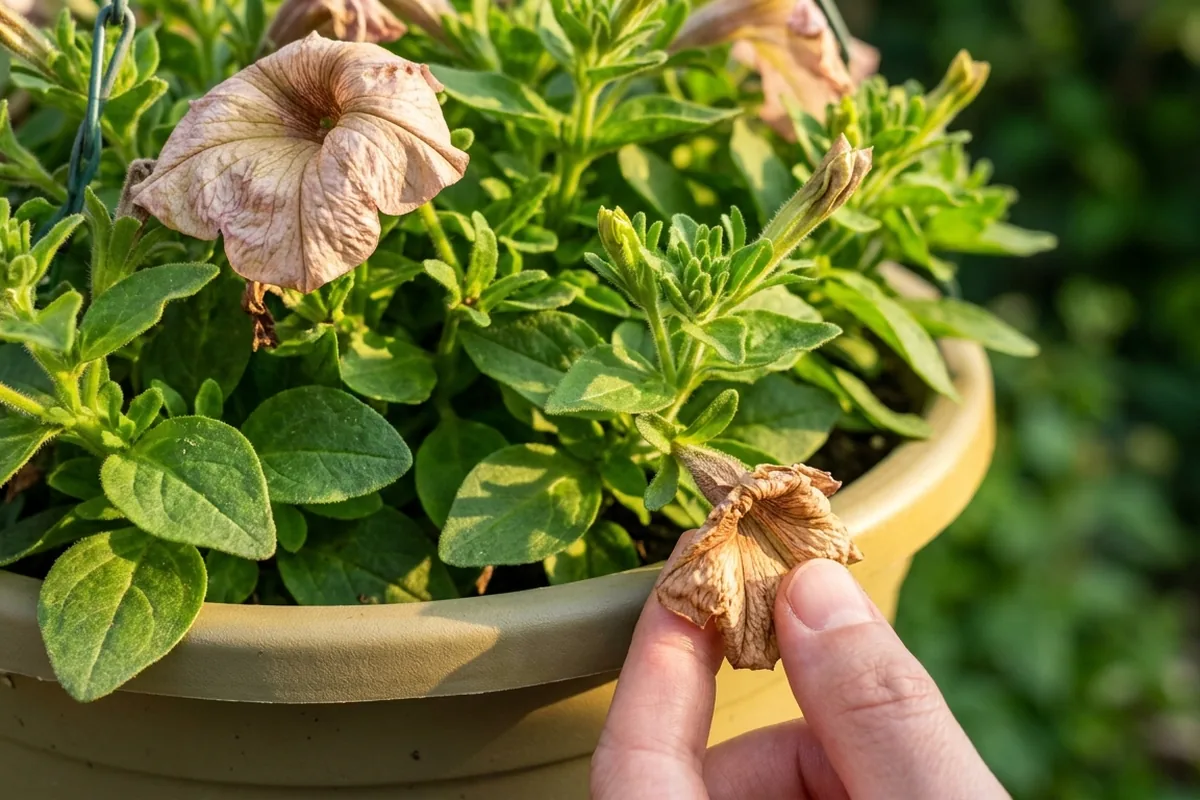
The basket usually looks best just as it starts to go wrong: lush green, spilling over the sides, but hardly any new buds. You may see a few tired flowers, lots of leaves, and long, straggly stems that have stopped bothering to bloom.
The real reason full baskets stop flowering
Most mixed summer baskets in the UK are crammed with petunias, calibrachoa, lobelia, verbena and geraniums. They flower their hearts out early on, then pause because something essential has quietly run out:
- space for roots
- nutrients in the compost
- enough water reaching every root
By mid-summer, the roots usually fill the whole liner. The compost that once held water and feed is now mostly roots and air gaps. From the outside it looks full and healthy; inside the basket, the plant is under stress.
Two things often happen together:
- It dries out very fast. You water, it runs straight through, and the basket feels light again within hours on a warm, breezy day.
- Flowering slows or stops. The plant puts energy into keeping leaves alive instead of making buds.
If this is happening on your basket, look for these clues: lots of foliage, long bare stems, small or few flowers, and compost that looks dry almost all the time. This is the point where many people water again and again, but never feed or trim, so the basket never really recovers.
Checks to make before you blame the plant
Before you give up on the basket, do three quick checks:
- Weight: lift from underneath. If it still feels unexpectedly heavy, wait; the compost may be wet in the middle even if the top looks dry.
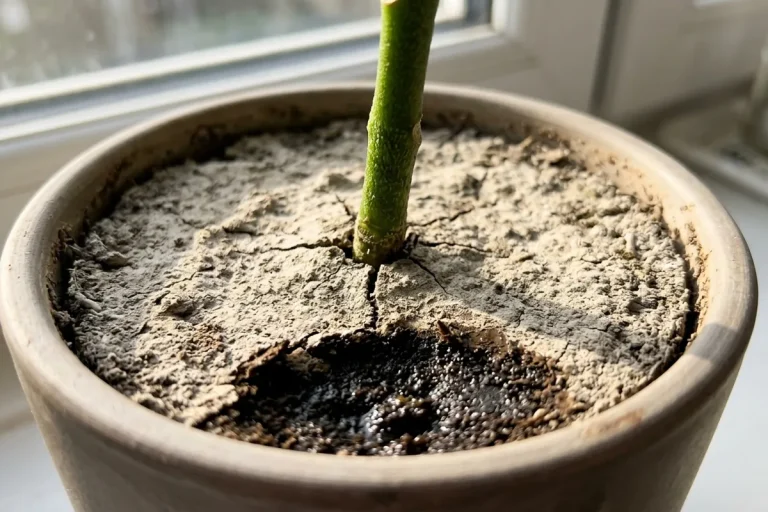
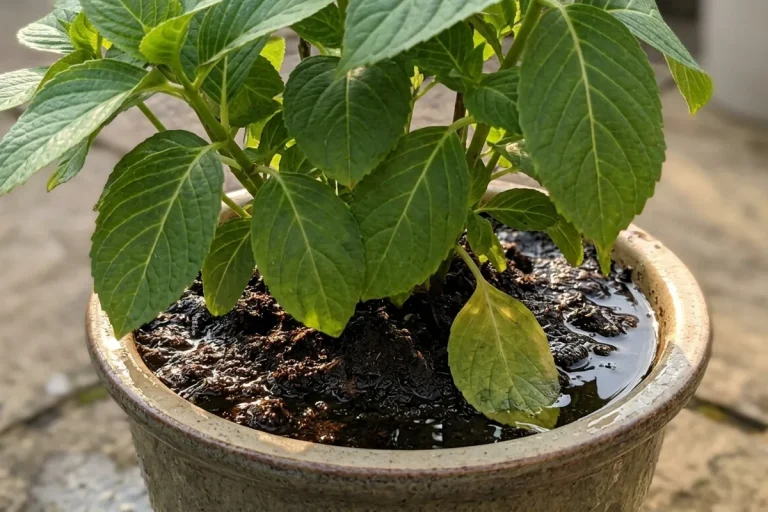
- Compost: push a finger 3–4 cm in. If it’s dusty-dry right through, the roots are probably stressed. If it’s soggy and cold, overwatering or poor drainage is the issue.
- Stems and flowers: look for long, stretchy stems with flowers only at the tips and lots of dead heads still attached. That tells you it needs a tidy and a feed, not more plants.
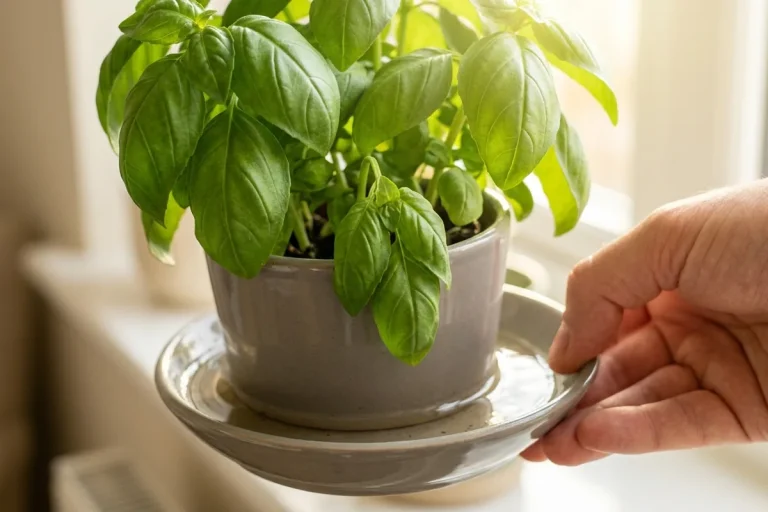
If the saucer or reservoir is still holding water the next morning, the roots may be sitting wet and sulking, which also stops flowering.
How to bring a leafy, flowerless basket back
You can usually coax more flowers with a short reset rather than starting again.
- Give it a deep soak. Stand the basket in a bucket or large trug of water for 10–15 minutes so the compost actually re-wets. Let it drain fully before rehanging.
- Deadhead and trim back. Snip off all dead flowers and cut back long, straggly stems by up to a third. It feels brutal, but it encourages new, flower-bearing growth.
- Start regular feeding. Use a high-potash liquid feed (tomato feed works well) every 7–10 days, following the label. This is often the missing piece once the compost’s nutrients are spent.
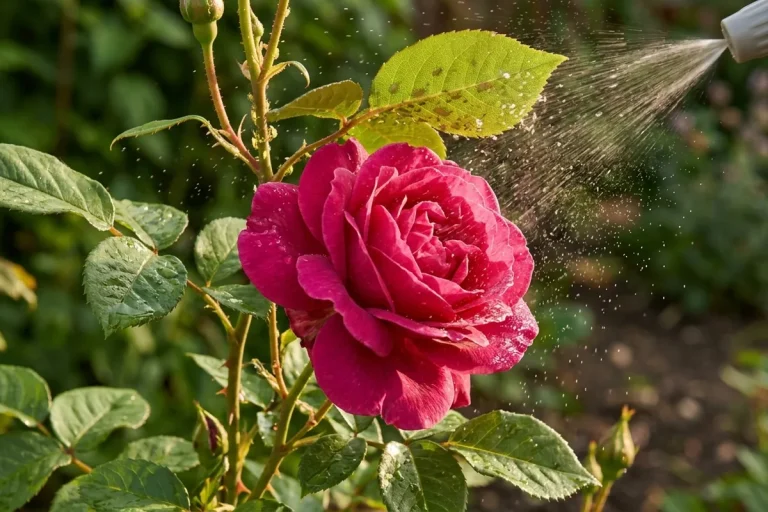
- Water properly, not constantly. In warm, dry spells, baskets may need watering once or even twice a day, but only when they feel light. A quick finger check tells you more than the surface of the compost.
- Check the position. If it’s in a windy, south-facing spot, it will dry faster than one under a porch. You may get better flowers by moving it slightly out of the harshest afternoon sun or wind.
If the roots are circling tightly and the basket is absolutely solid with roots, the show is probably in its last weeks. Keep watering and feeding and it should still give a decent flush of flowers before autumn.
A full, leafy but flowerless basket is usually a sign of tired compost and hungry, crowded roots, not your lack of skill. Start with those simple checks, adjust water and feed, and trim back once. Your next basket will be easier when you know what’s happening inside the liner, not just on the outside.
Reader note
The Flower Expert is an independent gardening publication. Your support helps us keep creating practical plant care guides for everyday UK readers.
This article was created with the assistance of AI and reviewed by an editor. It is intended as general gardening information, not personalised professional advice.
If you still have a question, or if something looks unclear or inaccurate, you can contact us through our contact form.
If you found this article helpful, please consider sharing it on social media or leaving a comment below with your own experience. It helps other readers too.