
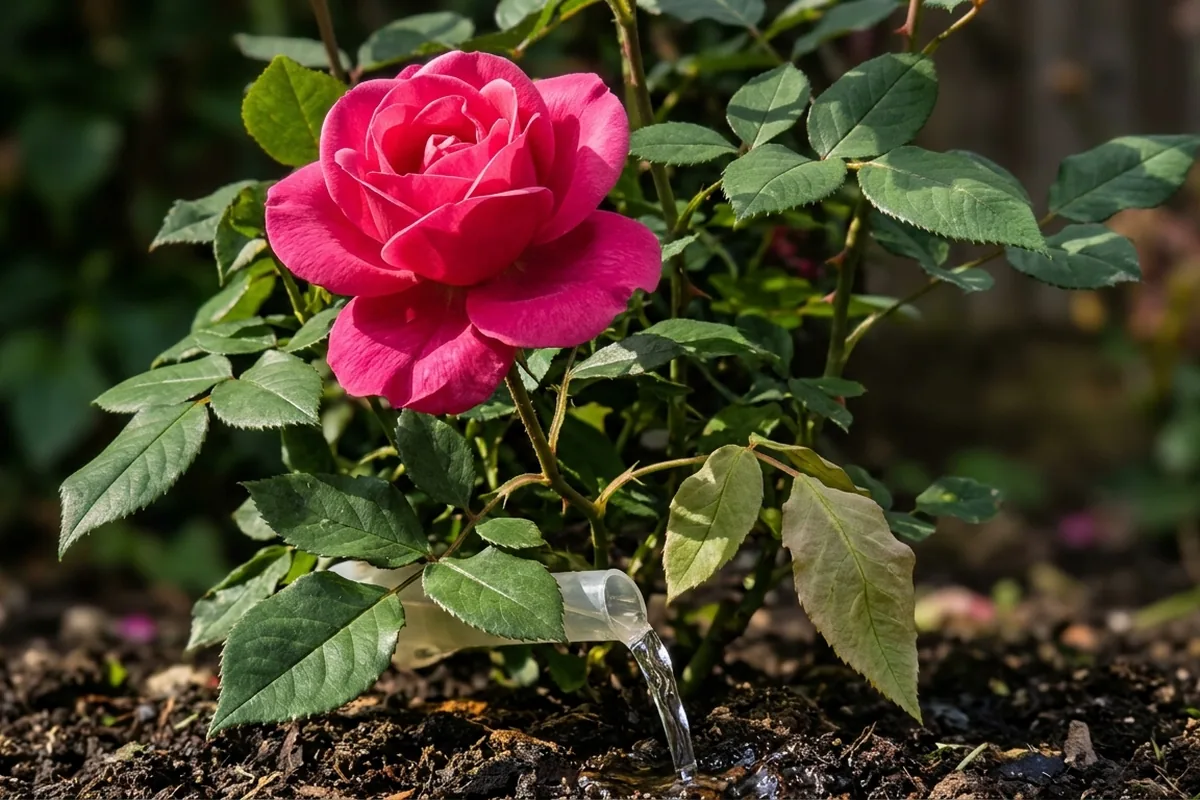
If your roses look lush and green but produce few or floppy flowers, they are almost certainly getting the wrong kind of feed, or too much of it. You may see long, sappy stems, soft leaves that mark easily, and buds that never quite open properly.
The simple feeding rule that keeps growth strong
For roses, high nitrogen = leaves, balanced feed = flowers and sturdy stems.
To avoid weak, leafy growth, aim for:
- A balanced or rose-specific fertiliser, not a high-nitrogen lawn or general “grow fast” feed.
- Two main feeds a year outdoors: once in early spring as growth starts, again after the first flush of flowers in early summer.
- No constant “little extras” from tomato feed, lawn feed splash, or leftover liquid fertiliser.
If you use a granular rose food, scatter it around the base, keep it off the stems, and water it in well. One good feed at the right time is far better than a weak liquid every time you water.
If your roses are in pots, they do need feeding more often, but still with a rose fertiliser or balanced feed, roughly every 2–3 weeks from April to late July. If the saucer is still holding water the next morning, reduce watering first before blaming the feed.
What to check if your rose is all leaf and no flower
Before changing fertiliser, look at the whole picture. The useful clue is not one leaf, but the pattern across the plant.
Weak, leafy growth is often made worse by:
- Too much nitrogen: using lawn feed nearby, chicken manure pellets in heavy doses, or strong liquid feeds.
- Rich, soggy soil: especially in clay borders or pots without good drainage holes.
- Deep shade: even perfect feeding will not fix a rose starved of light.
- Lack of deadheading: the plant thinks it has finished for the season.
If this is happening on your plant, first stop feeding for a few weeks. Let the growth firm up. Check the soil 3–4 cm down; if it’s still damp and cool, wait before watering again. This is the point where many people feed and water again, which only makes the growth softer.
How to feed for flowers, not floppiness
Once you have eased off the feed and water, you can reset your routine:
- In borders, mulch with garden compost or well-rotted manure in late winter or early spring, then apply a rose fertiliser in March/early April.
- In pots, refresh the top few centimetres of compost each spring and use a slow-release rose fertiliser, topped up with occasional liquid feed in peak flowering.
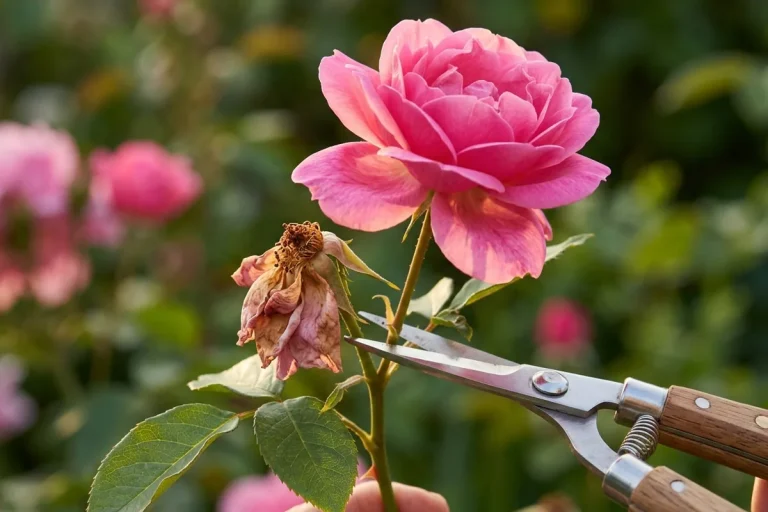
- Always deadhead spent blooms down to a strong outward-facing bud; this directs energy into new flowering shoots, not leafy side growth.
- Avoid feeding after late July/early August outdoors so growth has time to harden before autumn and winter.
If you are unsure which product to use, a rose feed from a garden centre or an RHS-endorsed balanced fertiliser is usually a safe choice. Always follow the packet rates; more feed does not mean more flowers.
With the right product, good timing and a pause on over-watering, your next flush of growth should feel firmer, carry more buds, and hold its flowers properly. Before you reach for another bottle of liquid feed, check the label, check the soil, and let the rose catch up.
Reader note
The Flower Expert is an independent gardening publication. Your support helps us keep creating practical plant care guides for everyday UK readers.
This article was created with the assistance of AI and reviewed by an editor. It is intended as general gardening information, not personalised professional advice.
If you still have a question, or if something looks unclear or inaccurate, you can contact us through our contact form.
If you found this article helpful, please consider sharing it on social media or leaving a comment below with your own experience. It helps other readers too.